

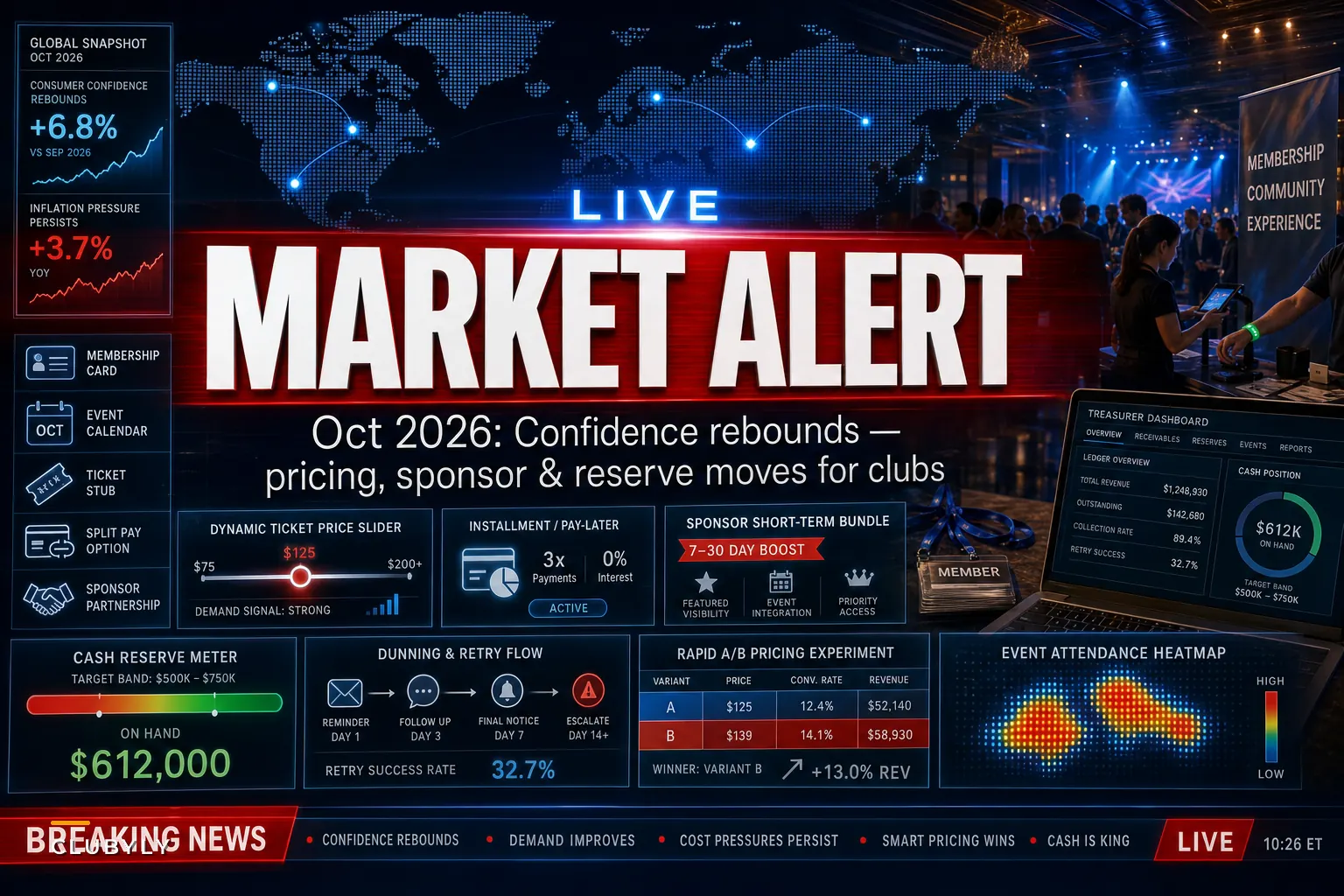

The Conference Board reported that its Consumer Confidence Index climbed to 91.7 in late October 2026, a bounce that landed right in the middle of fall and winter program planning. A few days later, CNBC covered the flip side: Q3 GDP came in stronger than expected while PCE inflation kept accelerating into September. Households feeling a little better about spending, while your venue, catering, and travel invoices keep creeping up.
That combination is more awkward than it looks. A confidence uptick usually means people are more willing to buy a ticket, renew early, or say yes to the holiday gala. But if your pricing was set three or four months ago against cheaper costs, you can sell out an event and still barely break even. The window to react is narrow, and most volunteer-run clubs don't move fast on pricing because nobody actually owns that decision.
Below are the specific moves worth making over the next few weeks — on club event pricing, sponsor packages, and cash reserves — that protect you when demand and costs rise at the same time.
The trap: selling into rising demand with stale prices
Here's the pattern that burns clubs. Demand softens in late summer, so you price conservatively to fill seats. Then sentiment rebounds, attendance comes back, and you're thrilled — until the treasurer runs the numbers in January and realizes the fall events netted almost nothing because food and room rental went up 8–12% while ticket prices didn't move.
A confidence bump is not a reason to relax. It's a reason to re-run your math before you publish the registration page. The willingness to spend gives you room to adjust price — but only if you do it on purpose.
Re-running event pricing without overcomplicating it
You don't need a cost accounting degree. You need a clean per-event margin number and a target. Separate fixed and variable costs, then price against the variable cost per attendee plus a share of fixed. Takes maybe 20 minutes if your numbers are in one place.
Keep your membership organized and engaged.
Clubyly simplifies member management, event coordination, and payment collection—effortlessly.
- Unified member database
- Automated payment tracking
- Event scheduling & reminders
No credit card required
| Line item | Spring pricing | Fall (actual costs) |
|---|---|---|
| Venue / room rental | $900 | $1,050 |
| Catering per head | $34 | $39 |
| AV + misc fixed | $300 | $340 |
| Ticket price | $55 | ? |
| Break-even @ 60 guests | ~$55 | ~$61 |
If you held the ticket at $55 into the fall, a sold-out room of 60 would land you roughly $360 short of where spring would have. Not catastrophic on its own, but repeat that across four events and you've quietly eaten a meaningful chunk of your reserve.
The move isn't necessarily to jump straight to $61. The confidence rebound gives you cover to land at $59 or $60, hold margin, and lean on sponsorship or a small add-on to close the rest of the gap. The point is you made the decision with eyes open instead of discovering it in a year-end report. For the mechanics of calculating event margins and keeping sponsor money separate from operating cash, the low-complexity finance operating model for volunteer-led clubs is worth keeping open while you work through this — it covers the margin-and-reserve structure this whole exercise assumes.
Flexible ticketing: capturing demand without pricing people out
A higher sticker price on top of elevated living costs can stall registrations even when sentiment is up. People feel more willing to spend, but they're also watching their own grocery and fuel bills. The answer isn't keeping prices artificially low — it's giving people more ways to say yes.
-
Early-bird with a real deadline. Price the early tier at your old number, the standard tier at the new cost-covering number. You pull cash forward and reward the committed members.
-
Pay-later / installment for higher-ticket events. For a $120 annual dinner, splitting into two payments noticeably reduces the "I'll decide later" drop-off. Later usually means never.
-
Member vs. guest pricing. Let the higher margin come from guests while members feel taken care of.
-
Small, optional add-ons. A $10 reserved table or a drink token covers margin without raising the base price everyone sees first.
When flexible ticketing is a bad idea
Installments and pay-later aren't free. They add reconciliation work and some risk of unpaid balances. For a $25 casual meetup, it's not worth the tracking overhead — just price it clean. Save the flexible structures for events where the per-ticket value is high enough to justify the admin.
Sponsors are more receptive right now — package for it
A rebound in confidence tends to loosen local business budgets too, at least briefly. Small sponsors who went quiet over the summer are more likely to pick up the phone in Q4 when they're thinking about year-end visibility and holiday goodwill. That window closes fast once budgets reset in January.
-
Lead with the season, not the logo. "Holiday event series sponsor" or "winter program partner" feels timely and limited, which creates some urgency.
-
Bundle three events, not one. Easier yes, better value, locks the money in before budgets tighten.
-
Include a measurable deliverable. Attendee count, email reach, social mentions — give them something to report internally.
-
Offer an in-kind lane. Some businesses can't spare cash but will cover catering or raffle items, which directly protects your event margin.
-
Set the close date. "Confirm by Nov 20 to be in the December program" keeps it from drifting indefinitely.
The in-kind lane deserves emphasis. If a local restaurant covers appetizers for your December event, that's $300–$400 off your variable cost — margin protection that's often easier to secure than a cash check in a tight budget season.
When offering an in-kind sponsorship option, document an estimated dollar value for the contribution so both your treasurer and the sponsor see the benefit clearly.
The mistake is pitching the same flat "$500 for a logo" package you always have. Rising costs are squeezing your sponsors too, so give them a reason that connects to their own goals.
Protecting cash resilience while you chase demand
This is the part that usually gets skipped. Higher demand plus higher costs means more money moving through the club, which feels like health but can mask a thinning reserve. You can book record attendance and still be fragile if deposits, vendor prepayments, and refunds are all hitting at once.
Vendor contracts. Lock catering and venue pricing in writing before you commit to a ticket price. With inflation expectations still elevated, a verbal quote from October can quietly rise by the event date. Get the per-head number and a cap in the agreement.
Short-term reserve floor. Set a minimum operating cash number you won't dip below, even to fund the next event. A reasonable rule for small clubs is keeping enough to cover two to three months of fixed obligations plus any event deposits already committed. When a confidence bump tempts you to over-invest in programming, that floor is what keeps a good quarter from turning into a cash crunch.
A real scenario
A regional hobbyist club with around 180 members ran four fall events last year. They held ticket prices flat from spring, sold well — roughly 85% capacity across events — and still finished the season about $1,100 short of their reserve target because catering had climbed and two vendor invoices came in higher than quoted.
This year they did three things differently: re-ran per-head costs before publishing prices, moved to a two-tier early-bird structure, and signed one local sponsor to a three-event holiday package that included in-kind catering for the December dinner. Same rough attendance. The difference was around $1,600 better on margin across the season, and the reserve actually grew instead of shrinking. Nothing dramatic — just decisions made at the right time.
The payment-flow adjustment people forget
When you introduce installments or early-bird tiers, you create new ways for payments to fall through the cracks. A pay-later balance that never gets collected is worse than never offering it. Before fall events go live, make sure someone owns follow-up on unpaid balances — a simple reminder at the time a second installment is due, and a clear cutoff date.
The clubs that get burned by flexible payments aren't the ones who offered them. They're the ones who offered them with no follow-up process, so a handful of balances just evaporate. Tracking this manually across a spreadsheet during a busy event season is where it breaks down. This kind of recurring, low-glamour reconciliation work is worth having a system handle — reminders, retries, a treasurer view of what's actually outstanding — so the flexibility you offered doesn't become a quiet leak.
Here's a simple flow to visualize the payment follow-up process.
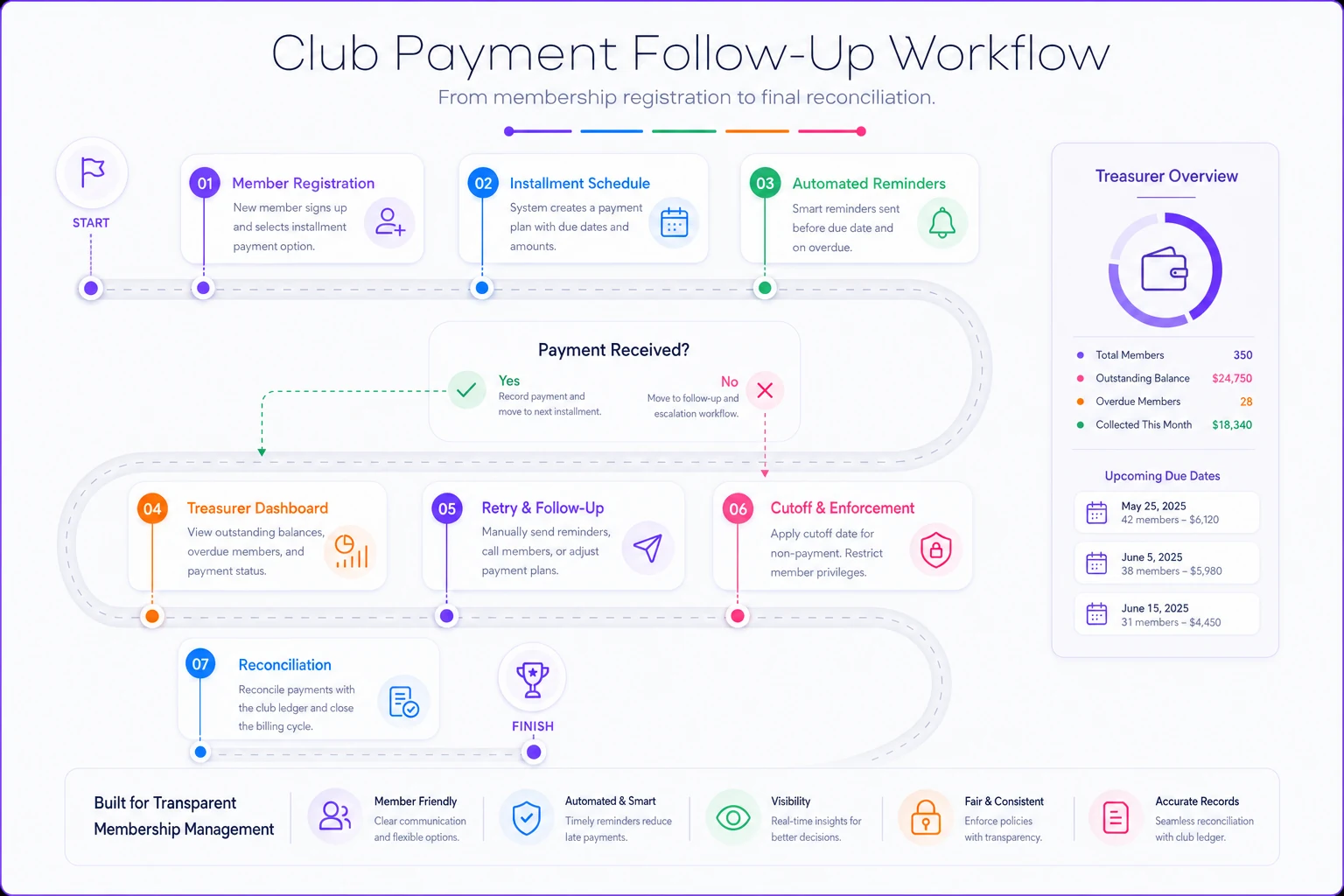
Visualizing the steps makes it easier to assign an owner for each handoff and to see where automation can replace manual work.
What to actually do in the next two weeks
These aren't big strategic pivots — most of them take a few hours, not weeks. The clubs that struggle through this kind of cost-demand squeeze usually aren't missing resources, they're missing a clear decision on who does what and when.
-
Re-run per-head and fixed costs for every remaining fall/winter event
-
Set cost-covering ticket prices; use early-bird to reward commitment and pull cash forward
-
Get vendor pricing locked in writing with a cap
-
Build one seasonal, multi-event sponsor package with an in-kind option and a hard close date
-
Confirm your reserve floor and don't fund new programming below it
-
Add a payment follow-up process before launching any installment option
Running through this list now, before your next event goes live, is the whole point.
The bigger point
A confidence bounce is a short window, not a trend you can count on. The clubs that come out of this season ahead aren't the ones that sold the most tickets — they're the ones that adjusted pricing with intent, used the moment to lock in sponsors and vendor terms, and protected their cash while everyone else was celebrating full rooms.
Demand is nice. Margin and resilience are what let you run the next season at all.
Demand is nice. Margin and resilience are what let you run the next season at all.
Ready to streamline your club operations?
Join 500+ clubs using Clubyly to save time, boost member engagement, and grow their communities.